
POWER THE BUILD. PLAN THE WHOLE SYSTEM.
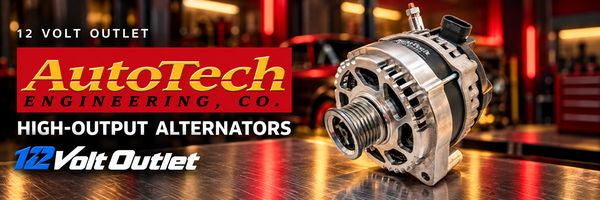
AutoTech Engineering high-output alternators
A serious audio build deserves a charging plan, not just a bigger number on the alternator. Start with the vehicle finder above, then use this guide to check the details that matter before you order.
AutoTech Engineering traces its high-output alternator production to 1985 in Riverside, California. Its manufacturer catalog covers car audio, custom vehicles and selected off-road, marine and racing applications. Availability and configuration vary by vehicle; a product shown in a manufacturer video is not automatically a fit for your build.
- What exact vehicle, engine and mounting arrangement do you have?
- How much output does your system need while idling?
- What charging voltage do your batteries and vehicle electronics require?
Installation planning | Manufacturer videos | Common questions
Choose the right alternator for how you drive
Daily driver
Tell your installer whether you spend most of your listening time in traffic or on the highway. Ask for the selected unit’s idle-output figure as well as its higher-speed rating.
Demo or competition build
Describe how long the system plays and how the vehicle is used. Include every amplifier and the battery bank in the discussion rather than selecting by the largest advertised wattage alone.
Custom or swapped vehicle
Bring photos, engine details and accessory-drive information. The original vehicle badge may no longer describe the hardware under the hood.
Understand the numbers before comparing units
AutoTech publishes ratings at specified engine speeds, including idle and higher-speed figures. Compare like-for-like conditions. A maximum-output number should not be read as a promise of the same output at a stoplight.
The company describes its builds as Denso hairpin-style alternators and notes that some catalog photos show the original equipment for reference. The supplied unit can look different. Check the confirmed application and included hardware instead of choosing by appearance.
High-output alternator installation: plan beyond the alternator
AutoTech’s technical guidance calls attention to belt length, grounding and the exact supplied harness. A shorter belt may be needed; do not assume the original belt will work. Powder-coated units need the specified grounding connection. Follow the instructions for your particular unit.
Before replacing parts, have the battery, belt, cables and grounds checked. DENSO’s diagnostic guidance identifies these as common contributors to charging problems. Loose connections and incorrect belt tension can cause trouble even with a new alternator.
- Fitment: confirm engine, bracket, pulley alignment and connector arrangement.
- Electrical plan: have the installer specify cable size, circuit protection and routing for the actual installation.
- Battery compatibility: confirm the regulator setting against the battery manufacturer’s charging requirements.
- Final checks: ask for charging-system testing under load and an inspection for warning lights, unusual heat or belt noise.
Learn directly from AutoTech Engineering
These videos are published by AutoTech Engineering and featured in its technical-help resources. Start with the overview. Use a harness or regulator video only when it matches the equipment supplied for your vehicle.
Your first high-output alternator
A manufacturer introduction in English and Spanish.
Wire-harness instructions
Review the supplied harness instructions before installation.
GM three-pin harness: detailed installation
For the applicable AutoTech GM three-pin harness configuration.
V1200 external voltage regulator
For installations specifically using this external regulator.
Quick answers before ordering
Will a bigger alternator cure every voltage-drop problem?
No. Battery condition, connections, wiring and belt operation need diagnosis too. An upgrade does not remove the need to correct an installation fault.
What should I have ready when asking for fitment help?
Your year, make, model, engine, existing alternator identification and photos of the mounting and connector. Mention engine swaps, aftermarket brackets and any changes to the belt drive.
Should I choose a voltage bypass or external regulator?
Only after confirming the complete charging-system requirements. Have the exact alternator, vehicle controls and batteries reviewed together. The videos are a reference, not a universal wiring recipe.
Keep planning your electrical system
Build your understanding with the 12 Volt Encyclopedia, or ask 12 Volt Outlet for application help before ordering. Include your vehicle details and system plan so we can focus on the right questions.


